 Barnorama Welcome To The Fun Barn
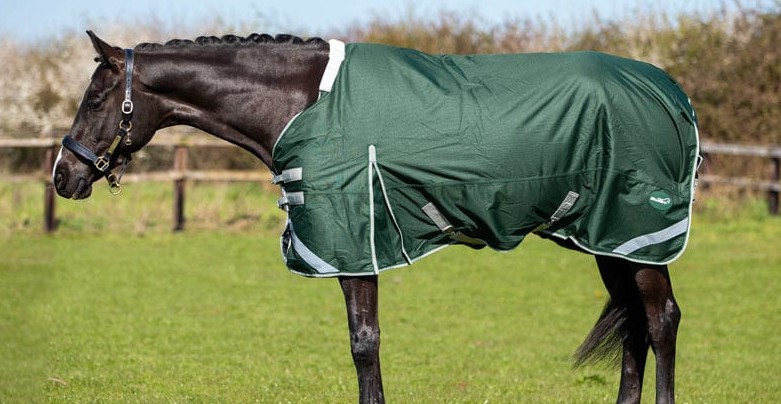
A horse rug is a good way to ensure your horse is comfortable in all seasons, both in the stable and out in the yard or field. A rug which is cut fairly high above the wither; the wither is a ridge at the base of the neck, between the shoulder blades, where the neck meets the back. This fit prevents painful rubbing and pressure around the chest. Flexible fabrics are among the best for obvious reasons.
Shoulder openings are useful for horses moving around in a field. Where under the belly is concerned a wrap-around is better for in the stable where a snug fit is ideal. However, make sure there is enough room when fastening under the belly.
The cut and fit are essential for the turn-out rugs to be self-righting. The best way to find if it fits your horse’s size and shape is to try it out first. You should be able to check if the darts are in the right place and if the leg straps are well positioned.
The types of rugs manufactured in the UK (Turn Out rugs, Coolers and Stable Rugs) are normally measured horizontally from the middle of the chest to the rump. A UK horse rug manufacturer measures their rugs in three-inch increments but allow an extra three inches for sturdy horses when measuring.
European manufacturers differ in that they measure in centimetres, from the wither horizontally across the top of the back to the tail. The ideal option is to check on a similar size horse that you have chosen a horse rug for before and then compare prior to purchase. A caveat is that sizes do tend to vary from brand to brand.
Then it comes to fitting the rug. It is useful to try the rug out over a thin stable sheet to stop your chosen rug from getting dirty. This prevents any return or exchange from becoming problematic.
Also, the front of the rug should be around three inches in front of the withers. This reduces the possibility of pressure sores. Run your hand down the front of the rug; if it does you are making progress. If it doesn’t the horse’s movement will be constricted.
The rug you have chosen should stretch comfortably to the top of the tail (the seam above the tail flap, if there is one). This will protect the horse from inclement weather conditions. If it appears to hang down under the top of the tail, then it is too long.
It is useful to check the straps, surcingles and filet strings. When fastening the hindleg straps, they should make a figure of eight, with each one going around the inside of each leg and looping through the other to prevent rubbing. These are adjustable, so it is recommended to have a hand-width between each one, again to prevent restrictions with its movement.
It is important to get the belly straps or surcingles right. Too long and the horse can get its legs tangled in the straps; too short and they can rub. There should be a hand-width from the strap to the horse’s tummy.
This article refers to stable rugs, coolers and outdoor rugs. For exercise rugs you will need a different configuration. They are sold in smaller sizes, but as you are dealing with increased activity, you want to enable movement without the possibility of the horse catching its rug on bushes or alternatively avoid the likelihood of the horse getting spooked by the rug flapping around. As a rule of thumb, a six-foot stable rug will necessitate an exercise rug of 4 foot six inches. Be watchful of horses who have a deep chest as this will require a different size.