Barnorama Welcome To The Fun Barn
Across the world, ordinary people have turned unfinished towers, open water, and even the ground beneath their feet into places to live. These four communities are portraits of hardship — but also of extraordinary resourcefulness, and of the human instinct to build a home out of almost nothing.
The Tower That Became a Vertical City
In Caracas, the capital of Venezuela, close to seventy percent of residents live in informal settlements that spill across the hillsides and seem to cover every slope of the city.
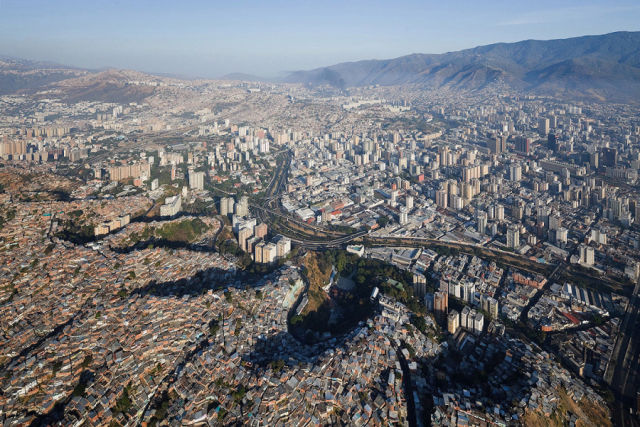
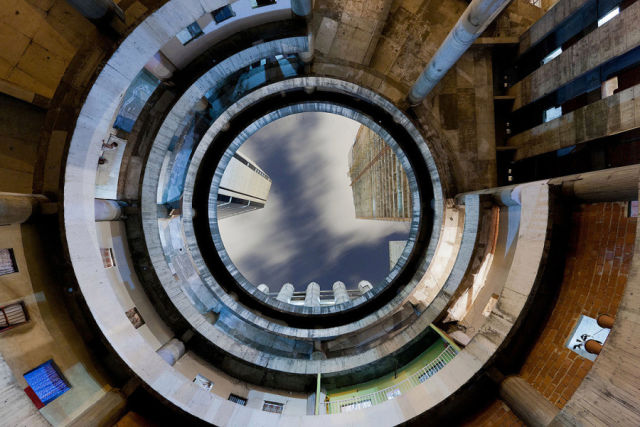
At the heart of the city stands the Torre David, a 45-story office tower that was never finished. Construction stopped when the developer died in 1993, and the collapse of the Venezuelan economy the following year sealed its fate. Roughly eight years ago, families began moving into the empty shell, and it has since become known as the largest vertical slum in the world.
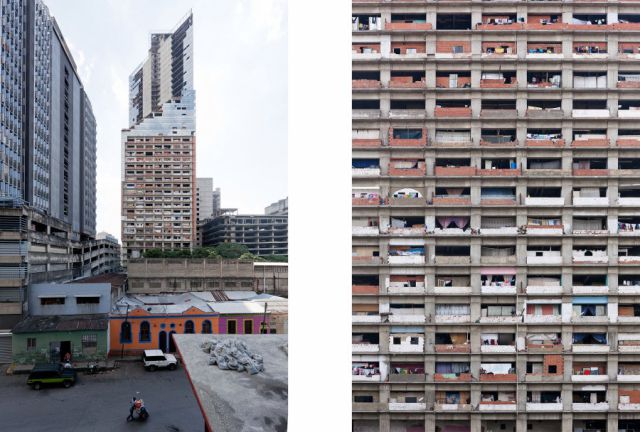
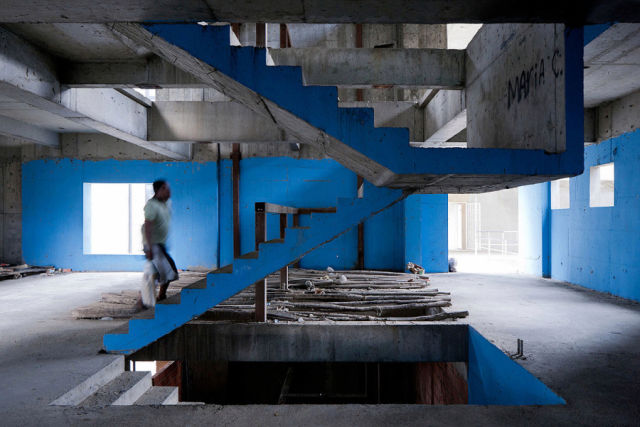
With no elevators or escalators ever installed, the whole building is one enormous forty-five-story climb. Older residents and those who struggle with the stairs tend to settle on the lower floors, while the young and able live higher up. Shared spaces like the stairwells are carefully painted, an effort to make the tower feel more like a real apartment block.
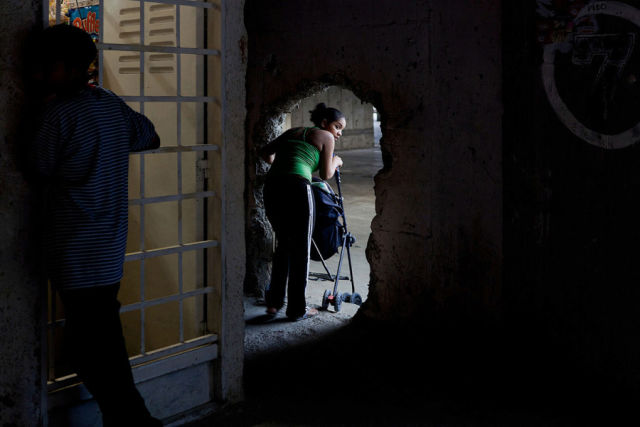
With Caracas averaging around 28 degrees, residents had to invent ways to keep the air moving. Openings cut into the walls double as a ventilation system and as landmarks that help people find their way through the building.
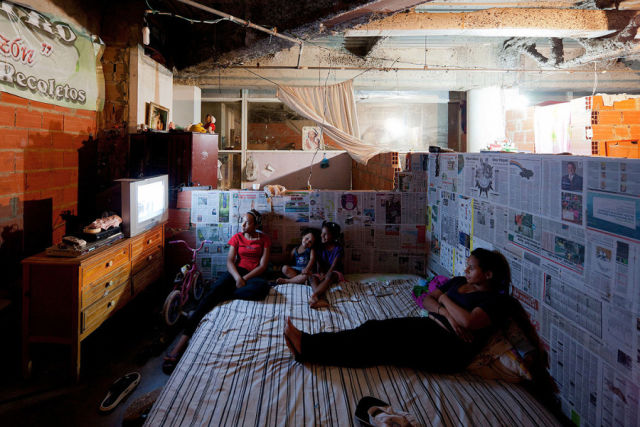
Making do with whatever they can gather or afford, families stake out and finish their own spaces with real ingenuity. In this home, sheets of newspaper stand in for wallpaper.
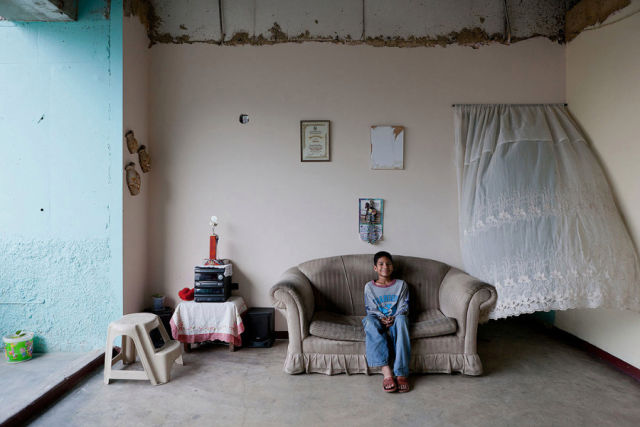
Every home in the tower is put together with care — at least as high as a person can comfortably reach.
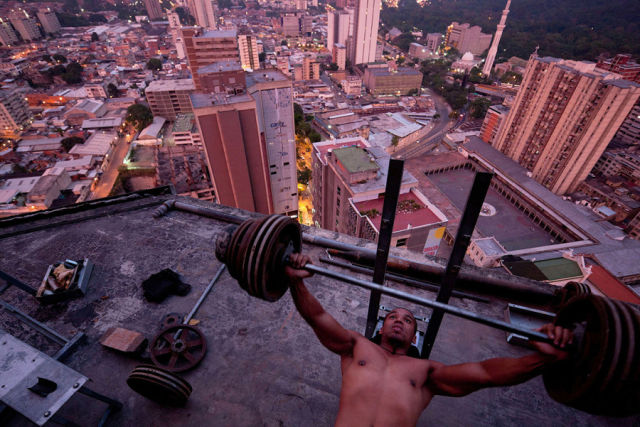
The tower runs on a whole web of small economies. Each floor has its own cluster of shops and services — there is a church, a grocery store, and even a gym on the 30th floor, where every weight has been fashioned from leftover elevator machinery.
Much like a beehive, the tower offers only a bare framework, and each resident builds something of their own within it, by whatever means they can manage.
A Community Built on the Water
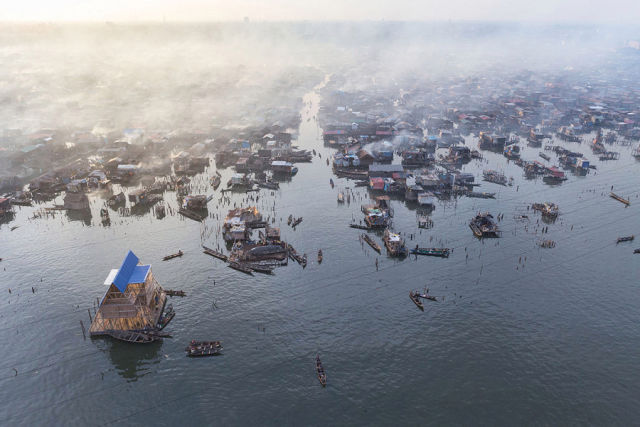
In the middle of Lagos, Nigeria, lies Makoko — a community of roughly 150,000 people who live and work on stilted structures raised just meters above the Lagos Lagoon.
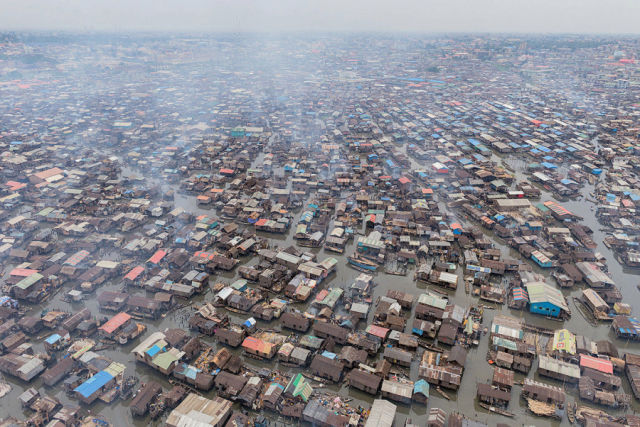
Makoko reflects both Nigeria’s relentless population growth and a striking example of how people adapt to conditions that seem almost impossible to live in.
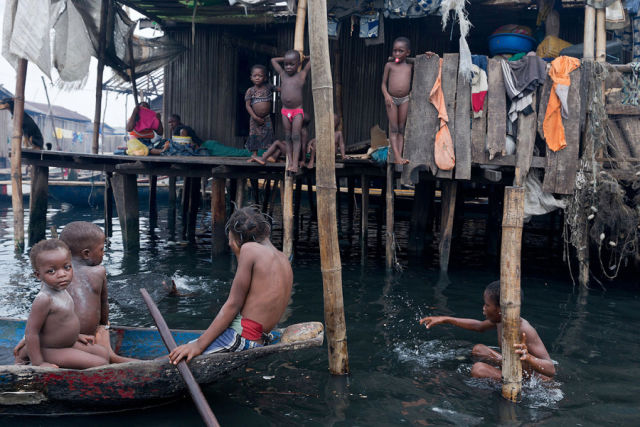
From the barbershop to the cinema, every part of daily life in Makoko has been reshaped to work on the water.
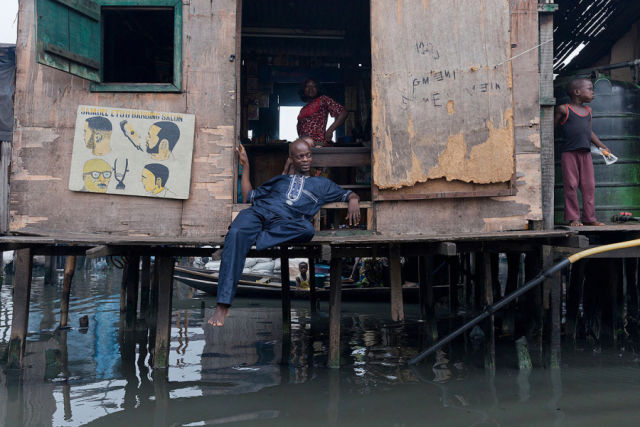
For all its hardships, Makoko still knows how to celebrate, and the atmosphere is unmistakably Nigerian. At almost any hour you might find a band drifting down the lagoon, playing for the whole community to enjoy.

Forced evictions are a constant threat in Makoko. In response to government plans to clear the area for development, Nigerian architect Kunle Adeyemi designed a floating school for the community’s children. Today the whole community makes use of the structure, which rises like a landmark above the water.
The Recyclers Beneath the Cliffs
Below the Mokattam cliffs on the edge of Cairo, Egypt, live the Zabaleen — a community of Coptic Christians who earn their living by collecting and recycling waste from homes and businesses across the city.
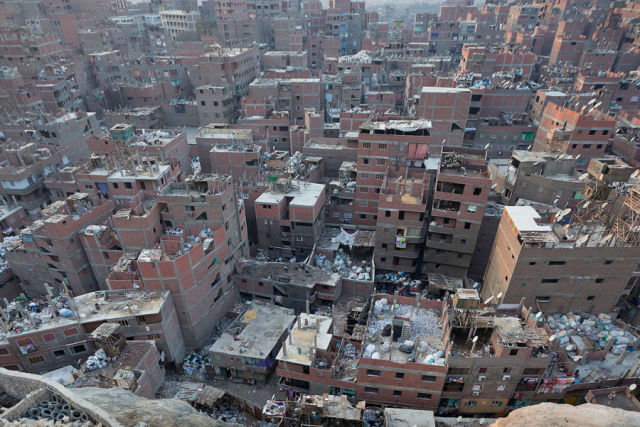
The waste is hauled back home, where it is sorted and compacted before being passed on to buyers. For the Zabaleen, the piles of garbage have simply become part of everyday life, all but invisible after years of living among them. Here, a window looks out onto the sorting.
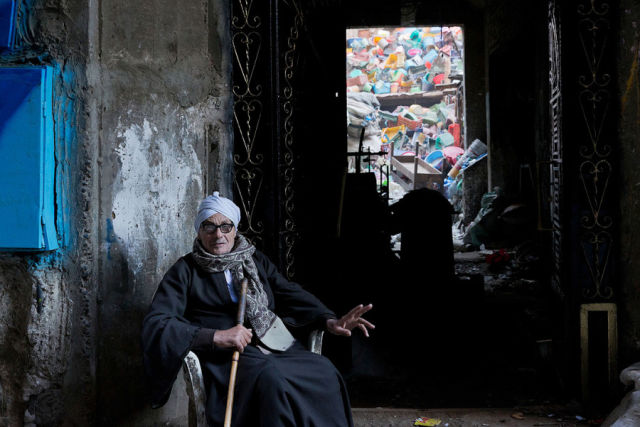
From the street the neighborhood can look chaotic, but step inside one of the homes and you may find carefully considered, even elaborate, interior design.

The Homes Carved Into the Earth
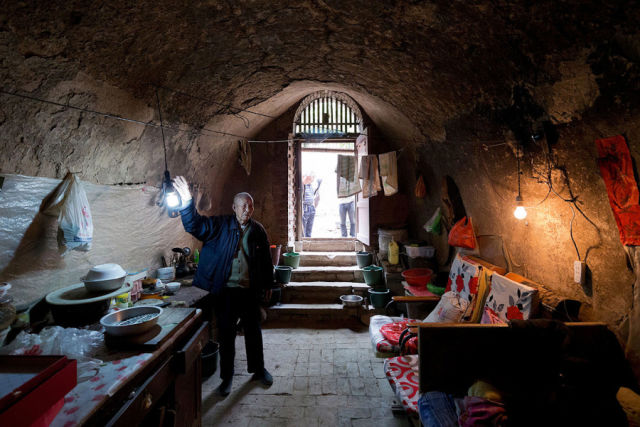
In the Chinese provinces of Shanxi, Henan and Gansu, you’ll find clusters of yaodong — cave homes hollowed out of the soft, workable soil of the Loess Plateau. Into the early 2000s, an estimated 40 million people still lived in these sunken courtyard dwellings, set some seven meters below ground.
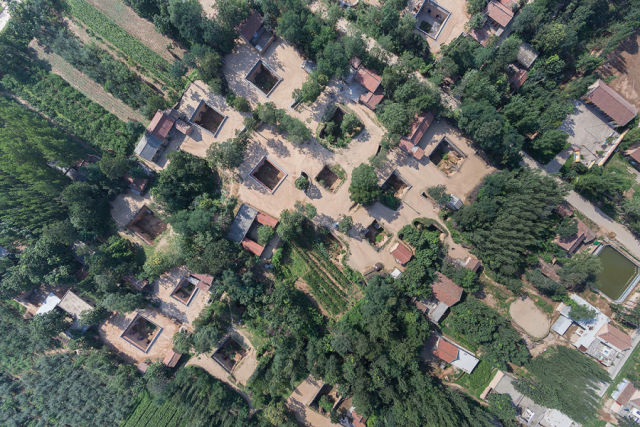
For poorer farmers, a yaodong costs almost nothing to build — all it takes is a shovel and a few friends to dig into the earth. And the finished result is surprisingly warm and homey.