 Barnorama Welcome To The Fun Barn
Laboratory environments rely on high-purity biochemical compounds to conduct precise quantitative measurements in experimental trials. Understanding the technical standards behind synthetic materials helps research teams achieve reliable outcomes across complex scientific projects.
Modern biochemical production uses advanced purification techniques to isolate specific amino acid sequences. Scientific personnel must verify these chemical parameters prior to initiating analytical testing routines within controlled laboratory facilities.
Defining Research Peptide Standards
Scientific teams analyze synthetic amino acid structures to observe target receptor responses in controlled laboratory settings. Many research facilities incorporate the GLP-3 RT research peptide into ongoing laboratory trials to maintain consistent analytical baseline parameters. Standardized chemical preparation steps protect structural integrity during early screening procedures.
Maintaining rigorous purity thresholds prevents unexpected chemical reactions during preliminary in vitro assays. Laboratory technicians record exact lot numbers to preserve batch consistency across multi-week testing cycles. Detailed logging practices simplify troubleshooting procedures when unexpected optical variance occurs.
Controlled storage parameters prevent premature degradation of delicate chemical chains. Dedicated cold storage protocols maintain sample properties for future analytical projects. Maintaining low humidity environments protects dry powder samples against ambient humidity accumulation.
Metabolic Signaling Applications
Metabolic research relies on specialized chemical compounds to trace underlying cellular pathways. Technical literature published by Elite Research Lab notes that specific laboratory compounds are studied for their interaction with multiple metabolic signaling pathways. Research operators trace the complex chemical networks to map cellular responses under variable test conditions.
Accurate molecular weight calculation prevents critical formulation mistakes during initial assay preparation. Precise concentration tracking allows technicians to replicate prior trial parameters without introducing baseline variance. Maintaining identical molar concentrations across test vials keeps experimental controls uniform during longitudinal studies.
Cellular assays demonstrate how minute structural modifications influence binding affinity. High-precision measurement tools detect subtle chemical shifts across comparative sample groups. Advanced analytical assays track molecular binding speed across extended observation windows.
Quality Verification and Purity Metrics
Quality standards dictate whether prospective raw materials satisfy strict experimental prerequisites. Technical documentation from a technical guide on laboratory standards indicates that research grade refers to supplier-defined standards where biochemicals are synthesized at a minimum purity of 98 percent for in vitro or analytical research.
Research laboratories review specific analytical documentation before integrating new compound shipments into active testing routines. Consistent documentation verification protects laboratory workflows against unverified batch variations.
- High-performance liquid chromatography purity certificates
- Mass spectrometry mass verification sheets
- Quantitative amino acid composition analysis data
Specialized analytical records confirm chemical composition and structural authenticity. Complete documentation transparency reduces experimental variation across independent laboratory trials. Reviewing analytical certificates prior to reconstituting dry compounds guarantees experimental validity.
Chemical Synthesis and Purification Processes
Modern synthesis protocols require specialized equipment to construct accurate amino acid sequences. Solid-phase chemical synthesis allows technicians to assemble complex peptide chains with high sequential precision. Automated synthesizer platforms deliver exact reagent volumes at predetermined reaction intervals to maximize sequence yield.
Multi-step purification rounds remove incomplete sequences and residual synthesis salts. Clean separation procedures help verify that output batches meet designated chemical purity standards.
Lyophilization processes convert liquid compound solutions into stable dry powder forms for transport. Standardized powder formats resist thermal degradation during shipment between specialized testing facilities.
Stability Testing and Environmental Control
Environmental variables directly affect compound stability during experimental projects. Guidance published by UK Peptides Pharma explains that a peptide stability testing protocol represents a structured analytical process used to evaluate how peptide materials respond to environmental conditions as time progresses.
Reconstitution protocols must follow strict solvent choices and temperature guidelines. Utilizing sterile laboratory-grade diluents prevents bacterial contamination during liquid sample preparation. Gently swirling the vial yields uniform dissolution without shearing delicate chemical structures.
Avoiding repeated freeze-thaw cycles preserves structural activity within delicate compound samples. Dividing stock solutions into single-use aliquots reduces thermal degradation risk. Storing aliquoted vials inside light-shielded containers prevents photo-oxidation during extended storage periods.
Analytical Verification in Laboratory Settings
Analytical instrumentation offers precise structural data for laboratory quality control teams. Chromatographic separation isolates primary compounds from minor reaction byproducts. Ultraviolet detection systems measure absorbance peaks to verify compound concentration and purity values.
Mass spectrometry confirms total molecular mass against theoretical sequence values. Verifying actual mass against expected values guarantees uniform batch composition. Quadrupole analyzers detect sequence mismatches or unwanted chemical modifications before testing commences.
Documenting analytical findings protects experimental records against data anomalies. Systematic laboratory record-keeping promotes transparent verification across scientific teams. Archiving spectral raw data allows independent researchers to audit experimental methodology.
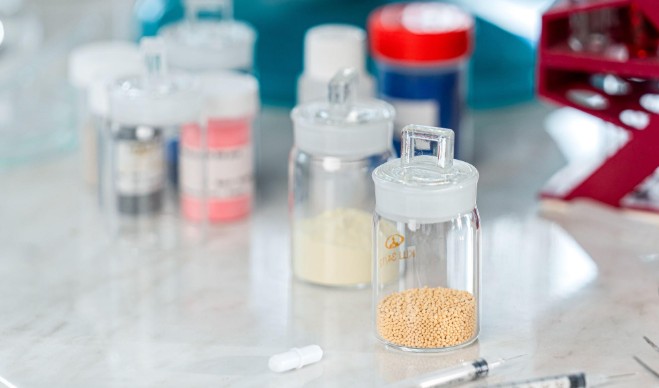
Understanding research-grade peptide standards protects the validity of experimental research. Verifying purity levels and maintaining environmental controls preserves sample integrity across testing routines.
Rigorous sample handling supports consistent results within analytical workflows. Systematic documentation remains key for reproducible laboratory science.